
What the Study Found
- Researchers kept lab grown human cortical tissue alive and developing for over five years, well past the previous published record of under two years.
- Chemical tags on the DNA of the tissue tracked real time in culture closely enough to work as an age gauge.
- After about a year, the tissue began carrying molecular signatures that in a real brain appear only after birth.
- Old cells mixed with young ones restarted neuron production but skipped early steps, making late stage neurons in two weeks instead of the usual months.
- A culture liquid built to support electrical activity kept neurons firing. At the one year mark, every organoid in the standard liquid had fallen silent.
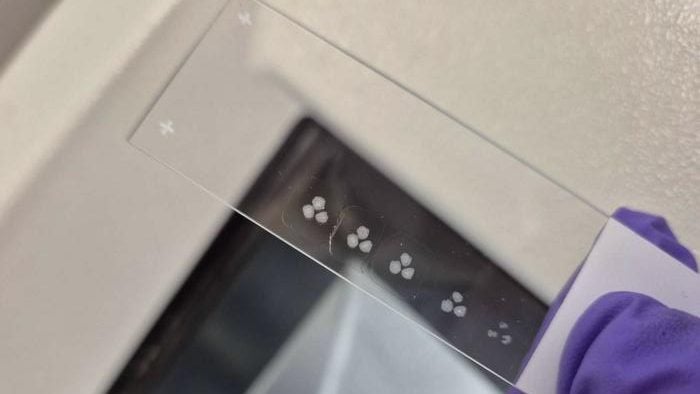
A human cortical neuron is in no hurry. It can take years to finish wiring itself, and in the front of the cortex the pruning of connections runs into the third decade of life. That patience is a problem for anyone trying to watch human brain development in a laboratory, because the lab grown clumps of brain tissue known as organoids have mostly been studied for a few months at a time, reaching something like a newborn’s brain after roughly 250 to 300 days. A team in Paola Arlotta‘s laboratory at Harvard University wanted to know what came after that, so they kept the same cultures going, tended in an isolated room, for more than five years.
Keeping tissue alive is not the same as letting it grow up. Telling those two apart was the real question, and it needed a measurement that did not simply count how many cells were still breathing.
So the team read the chemical tags that cells stick onto their own DNA. Certain spots in the genome gain or lose these methyl marks on a schedule regular enough that the pattern works as an age gauge, and the best known version, built from about 350 such spots, can place most human tissues within a few years of their true age. Reprogramming an adult cell back into a stem cell wipes that gauge nearly to zero, which is where every organoid in this study began. Sampling the tissue at nine points between three months and five years, the researchers found the predicted age climbing in step with time in the incubator, and a version of the gauge tuned specifically to human cortex agreed.

The Tissue Passed Birth Without a Body
By about a year in, the tissue had crossed a line that organoids had not crossed before. Cells started carrying molecular signatures that in a real brain show up only after birth, and the different cell types had arrived in roughly the order they do in a developing person. “In the human brain, these epigenetic changes accumulate according to a characteristic developmental pattern,” says Noelia Antón-Bolaños, an assistant professor at University Medical Center Utrecht who co-led the work with Irene Faravelli. “We observed the same pattern in the brain organoids.”
The neurons were the weak link. Their share of the cells shrank over the years, until the five year samples turned up a neuronal cluster of only about a hundred cells, though part of that decline is an artifact of the method: neurons are fragile, and breaking tissue into single cells for sequencing tends to destroy them. Staining intact slices told a kinder story, turning up neurons at two, three, four and nearly six years, but that method grew unreliable after the first year as background signal crept up.
The fix was a change of liquid. Standard organoid medium does not support the spontaneous electrical chatter that keeps young neurons alive, so from about ten weeks onward the team moved some cultures into a formulation designed to permit it. The difference showed in the wiring: at one year, roughly half the connections in the treated organoids sat on dendritic spines, the small knobs that mark a settled synapse, against about a quarter in the standard cultures. It showed more starkly on an electrode array. At the one year mark, all eight conventionally grown organoids produced no coordinated network bursts whatsoever, while all nine grown in the new liquid burst reliably.
That gap matters for how the result gets described. The organoids that reached five years were the conventionally grown ones, the same cultures in which neurons were thinning out, and the activity permitting recipe has so far been shown to hold neurons and network bursts for about two years, not five. The paper says plainly that these conditions would benefit from further optimization before neurons can be counted on across the whole span.
Old Cells Skipped the Steps They Had Already Taken
The strangest result came from taking organoids apart. The researchers broke up organoids that had been growing for nine to twelve months, then let the loose cells clump back together into fresh spheres. Left to themselves, the old cells picked up where they had left off and made the cell types appropriate to their age, mostly support cells rather than neurons.
Then the team mixed old cells with cells from organoids only two weeks old, using different donors for each group so they could tell afterward which cell came from where. Within two weeks the old cells were making neurons again, but not the early born ones their young neighbors were making. They jumped straight to a late arriving type that normally takes months to appear, and it accounted for nearly half of everything the old cells produced, against roughly one percent in an ordinary nine month organoid. “When we dissociated an older organoid and allowed the cells to grow again, they produced the cell types associated with a late developmental stage,” Antón-Bolaños says. The cells were not merely old; they carried a record of what they had already done.
What the Dish Still Cannot Do
None of this makes an organoid a brain. These are millimeter scale balls of tissue with no blood supply, and without vessels the interior runs short of oxygen and nutrients, which stresses and kills cells and caps how large the tissue can grow. They also lack the layered organization of a real cortex, and they have no body, no senses, and nothing to be about. Ethicists who have worked through the sentience question in detail argue that current cortical organoids fall well short of the structure most theories of consciousness assume, and that the measures used to gauge awareness in patients with brain injuries have no validated meaning when pointed at a dish.
What the tissue does have is time. Two year old organoids in the activity permitting liquid were bursting in two distinct groups, each with its own rhythm, which is not what younger tissue does. Whether that keeps sorting itself out at year five is unknown, because those cultures are only partway there.
Reference
Faravelli, I., Antón-Bolaños, N., Wei, A., et al. “Human brain organoids record the passage of time over multiple years.” Nature (2026). https://doi.org/10.1038/s41586-026-10877-x
- Study type: Experimental laboratory study of human stem cell derived cortical organoids, with a parallel experiment in mouse tissue.
- Sample: 110 organoids profiled cell by cell across 15 days to 5 years, combining 34 new datasets with 76 previously published ones, totaling more than 424,000 cells.
- Models: Several human embryonic and induced pluripotent stem cell lines from different donors; embryonic mouse cortex for the parallel mixing experiment.
- Manipulation: Switch to an activity permitting culture medium from day 70 onward; recombination of cells from old and young organoids into fresh spheres.
- Duration: Over five years of continuous culture, with staining performed on organoids up to 5.8 years old.
- Funding and conflicts: Supported by the Stanley Center for Psychiatric Research, the Broad Institute, the National Institutes of Health and others. Several authors, including the senior author, declare company advisory roles, founding roles or equity holdings.
- Data availability: Processed sequencing and methylation data are in public repositories. Some donor samples are restricted by consent, and raw methylation data are available on request.
- Main limitation: The organoids that reached five years were grown in the conventional medium, in which neurons steadily declined. The medium that preserves neuronal activity has been tested to about two years.
FAQ
What exactly is a brain organoid?
A ball of brain tissue grown from stem cells in a dish. It is a few millimeters across at most, has no blood supply and no connection to a body, and it organizes itself into some of the cell types and structures found in a developing cortex. It models parts of a brain. It is not a small brain.
Can these organoids think or feel anything?
There is no evidence that they can. They have no sense organs, no pain receptors, no way to act on the world, and none of the large scale wiring between brain regions that most theories of consciousness treat as necessary. Researchers who have examined the question closely conclude that the tools used to detect awareness in human patients have no validated meaning when applied to tissue in a dish.
Does a five year old organoid match the brain of a five year old child?
No. Time in culture and human age are not the same currency. The tissue crossed into postnatal territory after roughly a year and kept maturing after that, and its molecular age tracked time in the incubator closely, but the study does not claim the tissue reached the developmental stage of a five year old.
Why did the neurons struggle while other cells lasted?
Neurons rely on spontaneous electrical activity to stay healthy, and standard culture liquid does not support it well. Switching to a formulation designed to permit that activity kept far more neurons alive, firing and connected, at least out to about two years.
What is this actually good for?
Conditions such as autism and schizophrenia involve development that unfolds over years, and laboratory models have mostly stopped at the earliest stages. Tissue that keeps maturing for years opens up a far longer stretch of that trajectory for study, and possibly for testing drugs.


Cite This Page