
AI Research Trials Are Booming, But the Old Playbook Won’t Work
Economists are randomizing AI faster than they can finish the trials meant to test it, and most tools will not survive to see their own results published.
Research on jobs, prices, markets, and money. Coverage runs from household budgets to labor markets, industries, and macroeconomic policy.
Economists are randomizing AI faster than they can finish the trials meant to test it, and most tools will not survive to see their own results published.

An MIT plasma physicist and a financial economist have built a ten-parameter test, modeled on fusion’s famous Lawson criterion, that asks the question the industry tends to dodge: can a fusion power plant bring in more money than it consumes?

A Manhattan Institute report totals up the tax revenue from legal sports betting across US states and finds it small, roughly 0.2% of state receipts, often shifted from lotteries, and plausibly outweighed by the public costs of gambling harm.

A new Urban Institute brief finds Black workers concentrated in the jobs AI is least likely to touch, and shows that once education is accounted for, the exposure gap tracks schooling far more than race.

Pusan National University researchers built a portfolio model that trains on the investment decision instead of the price forecast. A companion review of 164 finance papers found five evaluation biases that quietly inflate reported results.
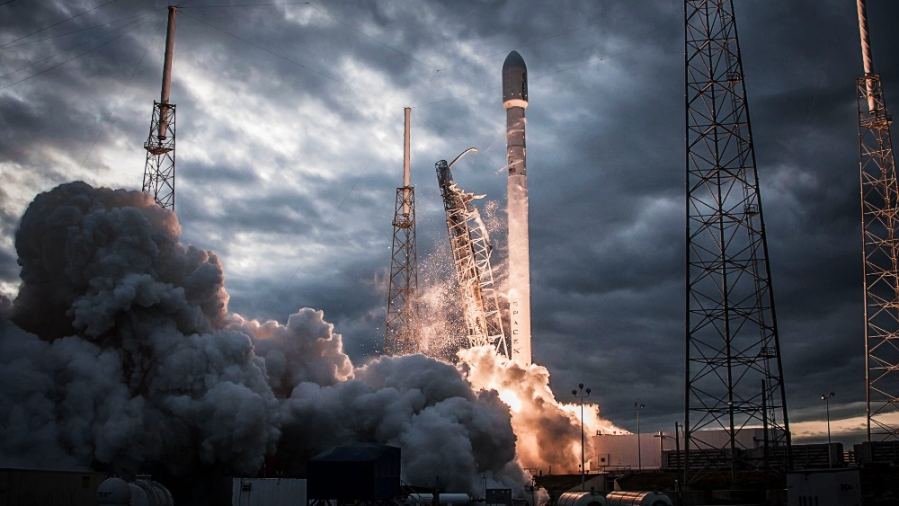
Cambridge economists tracking 4,405 launches liken SpaceX’s grip to the East India Company’s, warning a near-monopoly has every reason to charge what the market bears even as underlying costs collapse.

The top 0.1 percent hold $1 of every $6 in US private wealth, much of it never taxed because they borrow against assets instead of selling. UC Berkeley’s Brian Galle, writing for the progressive Roosevelt Institute, proposes charging interest on deferred tax at the asset’s own rate of return — so holding forever no longer shrinks the bill.

Rejections rose 67 percent over six years. After a denial, almost half of patients received no drug in the same therapeutic class within 90 days.

Graduate school is America’s main pipeline for recruiting foreign scientists, but that door is narrowing. A Peterson Institute brief warns the economic cost could reach $481 billion a year.

Sixty years of income data complicate the usual generational story. The bigger shift came when the two-earner household stopped delivering the same boost.

California’s FAIR Plan now covers many low-risk homes, as a Stanford study warns wildfire losses, not just premiums, drive the insurance crisis.

Condominiums are often the most affordable path to homeownership, yet the condo market is stalling. An Urban Institute report says broken approval rules and rising insurance costs are choking financing.