What the Study Found
- Heating contaminated wheat straw and corn stalks to 550°C removed over 90% of their mercury, mostly into gas that must be captured.
- More than 96% of arsenic in a metal absorbing plant moved into water during one wet pyrolysis test, leaving the solid char cleaner.
- Leftover char can go on to filter lead and cadmium from water, power batteries, or drive faster pollutant breakdown as a catalyst.
- Arsenic and chromium remain far less studied than mercury, cadmium, lead and nickel, and safety standards for scaled up use still barely exist.
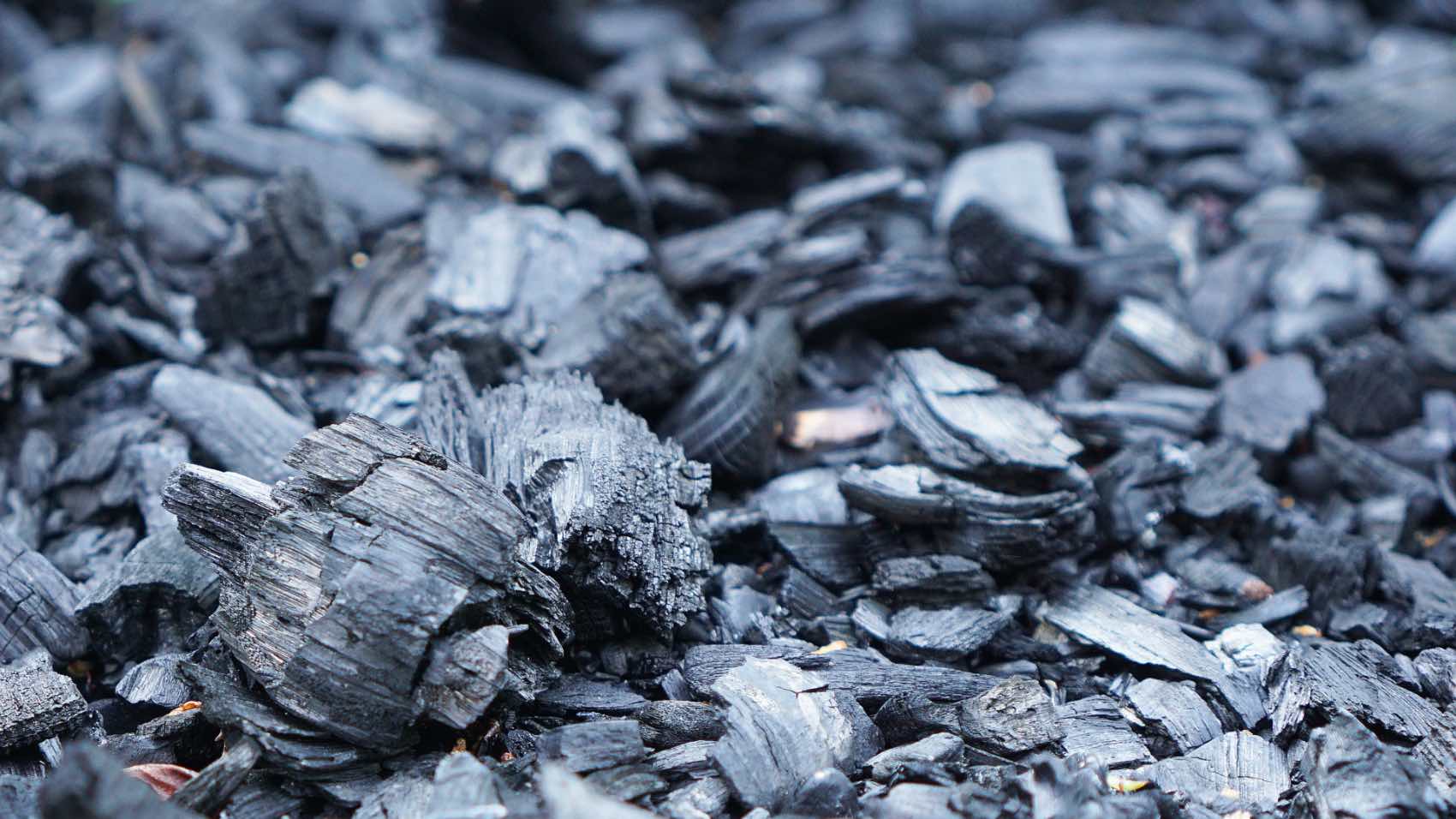
A pile of heavy metal contaminated crop straw does not just send ash into the air when it burns. A new review in Sustainable Carbon Materials argues that heating the same straw slowly, with almost no oxygen in the chamber, can hold most of its mercury, cadmium and lead in place, while turning the leftover plant matter into charcoal rich materials with real second lives. The review, drawing on two decades of published pyrolysis research plus new experiments of its own, calls the process slow pyrolysis and treats contaminated biomass less as a disposal headache than as an oddly promising feedstock. Trouble is, not every metal behaves the same way.
China alone has around 16.1% of its cultivated land carrying excess heavy metals, a picture that a separate national assessment of farmland pollution broadly corroborates, and the residue pulled from that land adds up fast: something like 13.2 to 14.4 million tons of contaminated crop straw a year, on top of whatever the hyperaccumulator plants grown deliberately to strip metals from soil, increasingly explored themselves as industrial phytomining crops, contribute. Burn it, bury it, or till it back into the field, and the metals mostly just move somewhere else.
Slow pyrolysis heats biomass at a rate below roughly 10 degrees C per minute, sealed away from air, until it breaks down into a solid char, a bio oil, and a gas. Different metals split up unevenly among those three as the temperature climbs. Mercury is first to go walkabout, drifting off as vapor at comparatively low heat, and cadmium, arsenic, lead and zinc follow in roughly that order as the chamber gets hotter. Nickel and copper, by contrast, tend to stay in the solid char no matter how high the temperature climbs.

That difference sounds like good news for a metal like nickel, since it simply refuses to leave the material behind. But for a metal like mercury, staying still is not the plan, since driving it off the solid only helps if whatever captures the escaping vapor actually holds it.
The review’s authors tested this themselves on mercury tainted wheat straw and corn stalks, pushing the pyrolysis temperature up to 550 degrees C. At that point, 94.0% of the mercury left wheat straw biochar and 93.2% left corn stalk biochar, according to the paper, dropping the metal remaining in the solid to what the authors call an extremely low level. More than 50% of that escaped mercury turned up in the noncondensable gas, with 24.90% to 31.41% dissolved into the bio oil instead, which is exactly why the authors insist any real world version of this process needs a proper gas capture system bolted on, not just a hot chamber.
“Heavy metal contaminated biomass should not simply be viewed as waste that needs to be disposed of,” says Yajun Wang, a co-corresponding author at the Agro-Environmental Protection Institute in Tianjin. “With appropriate thermal treatment and careful control of metal behavior, it may become a resource for producing functional carbon materials, recovering metals and generating energy,” he adds, framing contaminated straw less as a liability than as an oddly located ore deposit.
The Water Phase Plays by Different Rules
Dry pyrolysis is not the whole story. A second route, wet or hydrothermal pyrolysis, processes biomass inside pressurized water instead of driving off moisture first. Typically run between 180 and 360 degrees C under two to ten megapascals of pressure, it redistributes metals rather than boiling them off outright, pushing them into a liquid phase where they can, in principle, be fished back out, though separate hydrothermal work on other contaminated feedstocks finds some metals instead concentrating almost entirely in the solid char. Arsenic is the case study: in one hydrothermal liquefaction of Sedum plumbizincicola, a hyperaccumulator plant grown specifically to strip metals from soil, more than 96% of the arsenic ended up dissolved in the water phase, with less than 10% straying into the oily fraction. Arsenic and chromium remain trickier than the others regardless of route; the review notes both are studied far less systematically than mercury, cadmium, lead and nickel. Chromium adds its own wrinkle, shifting between a highly mobile toxic form and a far tamer one depending on how much oxygen is around during heating, which is one reason the authors treat the choice between dry and wet pyrolysis as an engineering decision rather than a one size fits all fix.
None of this makes pyrolysis automatically safe, and the authors are careful to say so. A process that concentrates metals into a smaller volume of char, oil or gas still has to prove that concentrate stays put once it leaves the reactor, whether in a field application, a water filter, or a battery electrode.
Scale Is Still the Missing Piece
Scale is the open question. Techno-economic analysis, lifecycle assessment and firm safety standards barely exist yet for these products, and the review’s own literature corpus, 5,727 records pulled from the Web of Science before screening, still leaves patchy coverage of exactly the metals, arsenic and chromium, that most need it.
Even so, the shift in framing matters: contaminated biomass stops being purely a hazard to bury and starts looking like feedstock with strings attached. The review catalogs biochar going on to soil amendments, water treatment adsorbents that pulled up to 176 mg of lead per gram of material out of solution in one study, catalysts, and electrodes, materials whose performance sometimes actually improves because the metals are already baked in rather than added afterward, the same confinement trick that a porous carbon built for fuel cell catalysts uses to keep its own metal particles from clumping. Supercapacitor electrodes made from metal laced biochar reached capacitances several times higher than plain biochar processed the same way, and catalysts built on hyperaccumulator derived char cleared pollutants faster than versions with metals bolted on from outside. None of that erases the disposal problem the crops started with, but it does suggest the fix and the payoff can land in the same reactor run.
Whether any of this reaches a farmer’s field depends on cost, regulation and plain follow through, none of which a laboratory reactor can settle on its own. For now, the smoke from that pile of contaminated straw has an alternative: a sealed chamber, a slow climb in temperature, and metals that, with enough care, stay exactly where the reactor puts them.
Reference
Wang, Z., Min, Q., He, K., Wang, R., Shang, G., Lin, D., & Wang, Y. (2026). Slow pyrolysis and product utilization of heavy metal-contaminated biomass from agricultural systems. Sustainable Carbon Materials, 2(1), 0–0. https://doi.org/10.48130/scm-0026-0024
- Study type: Peer-reviewed literature review with an embedded bibliometric analysis (Web of Science Core Collection, 2001-2025), plus original pyrolysis experiments by the review’s own authors. Published in Sustainable Carbon Materials.
- Studies included: 5,727 records initially retrieved from the Web of Science; final screened dataset size not reported. Duplicate, irrelevant and incomplete records removed before analysis.
- Inclusion criteria: Articles and review articles indexed in the Web of Science Core Collection, published 2000 to 2025, on thermochemical treatment and product use of heavy metal contaminated biomass.
- Period covered: Literature from 2001 to 2025; the authors’ own pyrolysis experiments are undated within the paper.
- Funding / conflicts of interest: National Science Foundation of China, GDAS’ Project of Science and Technology Development, and Guangdong Foundation for Program of Science and Technology Research. Authors declare no competing interests.
- Data availability: Not reported in detail; the paper states data are available from the corresponding author on reasonable request.
- Main limitation: Author-stated: post-treatment metal speciation, valence stability and long-term environmental behavior of pyrolysis products, especially for arsenic and chromium, are less studied than for mercury, cadmium, lead and nickel; techno-economic and lifecycle data for scale-up are largely still missing.
FAQ
Why can’t contaminated crop residue just be burned or buried like normal waste?
Contaminated crop residue can’t just be burned or buried because both routes tend to re-release the heavy metals it carries rather than getting rid of them. Burning volatilizes metals like mercury into smoke, and burying or tilling contaminated straw back into a field leaves the metals free to leach into soil or water again.
How does slow pyrolysis actually keep heavy metals from escaping?
Slow pyrolysis keeps some heavy metals from escaping by heating biomass gradually in a sealed, low oxygen chamber, which lets metals like nickel and copper bind into the resulting solid char rather than vaporizing. Other metals, mercury especially, still escape as vapor, which is why the review stresses that gas capture equipment matters as much as the reactor itself.
Is wet pyrolysis better than dry pyrolysis for removing metals?
Wet pyrolysis isn’t simply better than dry pyrolysis, it works differently. Rather than driving metals off as vapor, hydrothermal treatment tends to push them into the surrounding water, which can make recovery easier for some metals, arsenic among them, but the review treats the choice as depending on the metal and the goal, not a fixed hierarchy.
Could the resulting biochar itself be dangerous to use afterward?
The resulting biochar could still pose a risk if the metals it retains are not genuinely stabilized, which is exactly the caution the review raises. It argues that concentrating metals into char, oil or gas only pays off if that concentrate is proven to stay put in whatever application, soil, water filter or battery, it ends up in.


Cite This Page