
What the Study Found
- In obese diabetic mice, a wirelessly powered implant brought blood sugar back to normal within 60 to 90 minutes of switching on.
- Daily 60-minute sessions held blood sugar in check for six weeks, and the mice lost up to 10% of their body weight.
- Triglycerides fell while free fatty acids and ketones rose, which the authors read as a shift from burning sugar to burning fat.
- Linked to a commercial glucose monitor, the implant held glucose steady for 12 days; it has not been tested in people.
INSULIN doesn’t get rid of sugar, it just moves it, nudging glucose out of the blood and into cells, where whatever the body fails to burn gets stored as fat. In obese mice with type 2 diabetes, a wirelessly powered implant lowers blood sugar by turning glucose into gluconate, a compound the kidneys flush out, with no drug involved. Some of the sugar’s calories leave with it, and over six weeks the treated mice lost up to 10 percent of their body weight. Whether any of this works in a person is another matter entirely, since it hasn’t been tried in one yet.
Diabetes and obesity travel together so often that a team reporting in the journal Science uses one word for the pair, diabesity, and puts the number of people affected at more than 2.5 billion. Current treatments mostly mean lifelong drugs, which can bring side effects and may lose effectiveness over time.
Gold Nanoclusters Dusted With Platinum
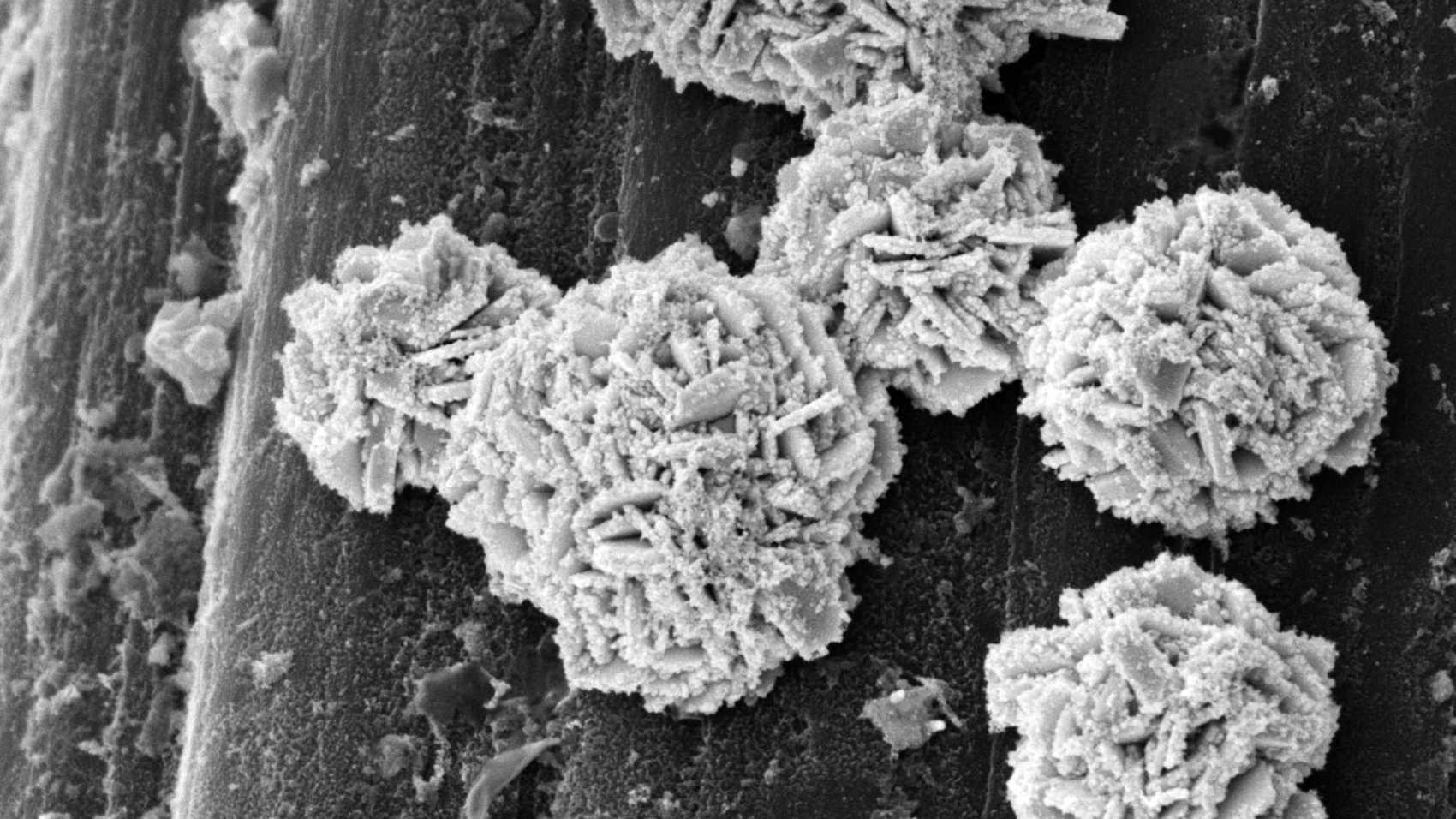
Martin Fussenegger, a professor of biosystems science and engineering at the Swiss Federal Institute of Technology in Zurich (ETH), and his colleagues built the device. They named it electrocatalytic closed-loop health optimization (ECHO), and its working part is a catalyst, a material that speeds up a chemical reaction without being used up. The catalyst is graphite felt, a porous carbon mat, studded with gold nanoclusters that are themselves dusted with even smaller platinum particles. Apply a small current and it oxidizes glucose, which here means adding an oxygen atom, to make gluconate. Because the current can be dialed up or down, so can the rate at which glucose disappears.

Power reaches the implant wirelessly, from a coil outside the body to a receiver coil in its waterproof, 3D-printed casing, at 13.56 megahertz, a radio band set aside internationally for industrial, scientific and medical use. No cells, no enzymes, nothing biological: just metal, carbon and electronics. That, the team argues, sidesteps the headaches of immune tolerance, stability and regulatory approval that biology-based designs, including its own earlier gene networks, run into.
The Mice Burned Fat Instead
With eight mice per group, the team implanted the device in db/db animals, a strain that is obese and has type 2 diabetes, and switched it on at 0.75 volts and 10 milliamperes. Blood sugar returned to the normal range within 60 to 90 minutes, roughly as fast as it settles in healthy mice after a meal. Switch the power off and high blood sugar crept back; a session of 60 minutes a day kept it in check for the full six weeks.
Fussenegger sees a break with convention. “We are now showing that we can take control of glucose directly, using electronics rather than drugs,” he says.
Removing glucose this way also removes calories. Gluconate leaves mostly through the kidneys (the paper cites about 90 percent), so part of the sugar’s energy exits in the urine instead of being stashed as fat. After six weeks the treated mice had lost up to 10 percent of their body weight. Their blood triglycerides, a type of fat, fell, while free fatty acids and ketone bodies, which the body makes more of when it leans on fat for fuel, went up. The authors read that as a shift from glucose to fat as the main fuel, and they report that blood pH never dropped below 7.35, a sign that ketoacidosis, a dangerous build-up of acid in the blood, did not set in.
Where the Loop Gets Fiddly
A fixed daily session has an obvious flaw: a treatment that always switches on cannot know when blood sugar is already low. The paper concedes that dangerously low blood sugar cannot be completely ruled out with that open-loop approach, so the team built a closed loop, in which a sensor decides when the implant fires.
They paired the implant with a commercial continuous glucose monitor, the FreeStyle Libre 3, and set a glucose threshold above which the implant switches on. Short bursts of five minutes were enough to hold glucose steady without low readings for the monitor’s licensed lifespan of 12 days, a separate experiment from the six weeks of daily treatment. The press release describes the sensor signaling a smartphone or smartwatch over Bluetooth, which then activates the implant. The methods section is scruffier: because the monitor’s own communications are proprietary, the team programmed its reader to vibrate at a high-normal glucose level, caught the buzz with a vibration sensor, and let an Arduino microcontroller switch on the power.
All of this happened in mice. Eight per group is a small number, and the closed loop ran only as long as one monitor lasts. Inflammation was checked over 30 days, with no marked difference between stimulated and unstimulated mice, and implants kept their glucose-oxidizing activity after three months under the skin. In a 5-liter circulation rig (roughly a human’s blood volume, the release says), larger electrodes oxidized glucose almost completely, which is a bench result, not a body.
The team now wants to turn the prototype into a medical device, and it points out that the wireless power and control hardware already exists commercially. What nobody can say yet is whether a person would tolerate gold and platinum under the skin year after year, or how much sugar a human implant would need to strip out to matter.
Reference
Maity, D., Guha Ray, P., Buchmann, P., Charpin-El Hamri, G., & Fussenegger, M. (2026). Wireless electrocatalytic closed-loop system for drug-free management of diabesity. Science, 394(6822). https://doi.org/10.1126/science.ady8560
- Study type: Animal study in obese type 2 diabetic db/db mice, with bench experiments; peer-reviewed research article in Science.
- Sample size: 8 mice per group, with wild-type, untreated diabetic and implanted diabetic groups; mostly male mice.
- Intervention: Wirelessly powered implant with platinum-decorated gold nanoclusters on graphite felt, activated at 0.75 V and 10 mA for 60 minutes a day.
- Comparator: Wild-type mice, untreated diabetic mice, and diabetic mice carrying an unstimulated (switched off) implant.
- Duration: 6 weeks of daily treatment; closed-loop control for the 12-day licensed life of the glucose monitor; inflammation assessed over 30 days.
- Funding / conflicts of interest: European Research Council advanced grant (no. 785800) and, in part, the Swiss National Centre of Competence in Research for Molecular Systems Engineering. No competing interests declared.
- Data availability: Data are in the paper and supplementary materials; materials are available from the corresponding author on reasonable request.
- Preregistration: Not reported.
- Main limitation: Mice only, in small groups of 8, with no human testing; closed-loop control used a proof-of-concept link to a commercial monitor and ran for 12 days.
FAQ
Does removing blood sugar this way make people lose weight?
Removing blood sugar this way made the diabetic mice lose weight: treated animals lost up to 10 percent of their body weight over six weeks. Their blood fats also shifted in a way the authors read as burning more fat for fuel. Whether people would respond the same way is unknown, because the implant has not been tested in humans.
Why does the implant need a glucose monitor?
The implant needs a glucose monitor because switching it on at fixed times cannot completely rule out dangerously low blood sugar, as the paper itself concedes. Linked to a commercial continuous glucose monitor, the implant switched on only when glucose rose above a set threshold and held glucose steady for the monitor’s 12-day licensed lifespan.
Is it safe to leave gold and platinum under the skin?
Nobody knows yet whether it is safe for people, because the implant has been tested only in mice. In those mice, inflammation was checked over 30 days with no marked difference between stimulated and unstimulated animals, and implants kept their activity after three months under the skin.
When could an implant like this reach patients?
An implant like this could reach patients only after testing in humans, and no timeline has been given. The team says it wants to develop the system into a medical device, and notes that the wireless power and control hardware already exists commercially.


Cite This Page