
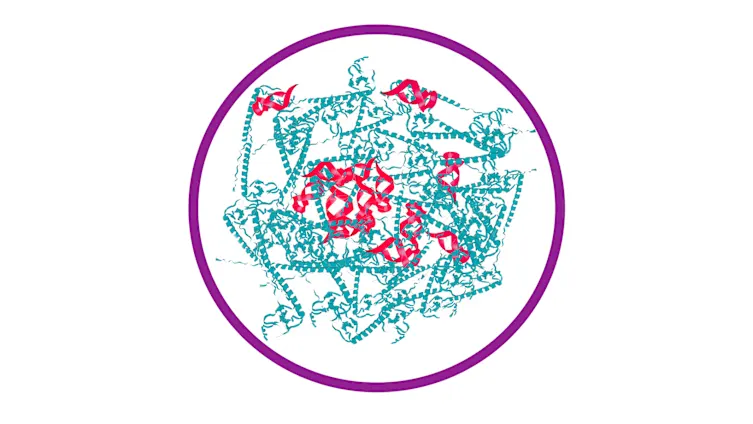
What the Study Found
- The team gave mice an mRNA shot in the muscle, then a second dose in the vaginal tissue: viral protein plus tiny particles called BEACONs. Six months later they hit the mice with a deadly dose of herpes simplex virus 2 (HSV-2). Eighty percent lived, with no chronic illness. Of mice that got the usual muscle booster instead, only 40 percent lived that long.
- Not one mouse in the vaginal group fell visibly ill. Every mouse that got just the first shot came down with severe disease.
- Each BEACON carries two things: a bit of DNA (CpG) that wakes up the immune system, and a protein (the chemokine CXCL9) that calls immune cells in. The particles run 150 to 200 nanometers wide. Bundling the two together sent about ten times more DNA to the immune cells that run the defense, and half as much to the neutrophils that drive inflammation. That spared the tissue the inflammation the DNA causes on its own.
- The booster filled the vaginal tissue with long-lived memory T cells and high local antibody. Remove the T cells or the B cells, and most or all of the protection falls away.
- Six months after infection, nerve clusters where the virus hides showed no active latent virus in the vaginally boosted mice. In mice given the usual vaccine, they did.
- Every result comes from mice. No one has tested whether this works in people.
In June, researchers at Yale University reported a new way of vaccinating against genital herpes, one that splits the job into two steps. The mice in their decisive experiment first received an ordinary intramuscular shot, an mRNA vaccine carrying instructions for one of the herpes virus’s surface proteins. Weeks later came a second step no clinic offers: a dose of the same viral protein, mixed with custom-built nanoparticles, delivered directly into the vagina. Four weeks after that, the animals were challenged with about five times the lethal dose of herpes simplex virus 2. Every mouse that had received only the shot went on to develop severe disease and had to be euthanized. The mice that got the vaginal boost never showed so much as ruffled fur.
The stakes behind the experiment are enormous. Genital herpes, caused mainly by HSV-2, is a lifelong infection: the virus retreats into nerve cell clusters called dorsal root ganglia and reactivates periodically for decades, sometimes with painful sores, often invisibly. World Health Organization estimates put nearly half a billion people living with HSV-2 in 2016, and there is no cure; antiviral drugs blunt symptoms but do not stop transmission or reactivation. The infection also compounds a second epidemic. People with HSV-2 are at least three times as likely to acquire HIV if exposed, and a WHO-commissioned analysis attributed nearly 30 percent of new sexually acquired HIV infections in 2016 to HSV-2.
Why a Shot in the Arm Has Never Been Enough
Decades of vaccine work have run aground on a problem of geography. The closest the field came to success was a vaccine built from the HSV-2 surface protein glycoprotein D, the same protein used in the new mouse study. But in a randomized trial of 8,323 women, that vaccine showed no efficacy against HSV-2 infection at all, a result published in 2012 that helped sour the field on conventional formulations. The likely reason is that an injection in the arm raises antibodies and immune cells that circulate in the blood, while herpes enters through the vaginal lining, a tissue those circulating defenders barely visit.

What guards that lining in a body that has fought off infection before is a corps of tissue-resident memory T cells, sentinels that take up permanent positions in barrier tissues rather than recirculating, positioned to respond the moment a familiar pathogen returns, as immunologists Jason Schenkel and David Masopust describe in a widely cited review. Standard intramuscular vaccines are notoriously poor at installing these cells at mucosal surfaces. Akiko Iwasaki‘s lab at Yale has spent years attacking exactly that gap with a strategy it calls prime and pull: prime the immune system with a conventional shot, then pull the resulting defenders to the vaginal tissue with a local signal.
The lab’s earlier pulls each came with a catch. Applying chemokines, the signaling proteins that summon immune cells, recruited T cells to the vagina and gave partial protection, but the approach never engaged B cells, the antibody factories needed to neutralize virus in the vaginal fluid. Applying CpG, a synthetic DNA fragment that alarms the innate immune system, did cut viral levels, but only at doses that inflamed the vaginal tissue, an unacceptable trade. “We had these two really promising strategies in the lab, but each had some shortcoming,” says Sachin Bhagchandani, the postdoctoral researcher who led the new study, published in Science Immunology. “So we set out to formulate a particle that could overcome those shortcomings.”
Two Flawed Ingredients, One Particle
The particle Bhagchandani built, named BEACON, exploits a simple electrostatic attraction. CpG DNA carries a negative charge; CXCL9, the chemokine, carries a positively charged tail. Mixed together, they self-assemble into stable spheres 150 to 200 nanometers across. The tail turned out to be important: delete it, or swap in the closely related chemokine CXCL10, and the mixture collapses into useless aggregates that protect no one. In the intact particle, both halves kept working. The chemokine still steered T cells in migration assays, and the DNA triggered its alarm receptor, TLR9, three times more strongly than free CpG, presumably because the particles are ferried more efficiently into the cell compartments where that receptor sits.
The packaging also changed who got the DNA. Fluorescent tracking showed vaginal immune sentries, the antigen-presenting cells that activate T cells, took up about ten times more CpG when it arrived in BEACONs, while inflammatory neutrophils took up about half as much. Vaginal tissue examined under the microscope two days after dosing showed markedly less inflammation than tissue given the same dose of free CpG. That let the team use a tenth of the CpG dose that caused inflammation in earlier work without losing the immune stimulation. “This formulation is quite remarkable in that way,” says Iwasaki, the study’s senior author. A human-compatible version of the particle built from the CpG already used in an approved hepatitis B vaccine, a TLR9-targeting adjuvant the FDA licensed in 2017, formed just as readily, a hint that translation is at least chemically plausible.
The protection itself turned out to depend on two local armies at once. Vaginal boosting drove virus-specific IgG and IgA antibodies high in vaginal fluid while leaving blood levels largely untouched; the conventional intramuscular boost did the opposite, topping up blood antibodies while the vaginal lining stayed thinly defended. When the researchers deleted immune cell types before the viral challenge, both armies proved necessary. Mice stripped of CD8 T cells developed worse disease and carried more virus. Mice engineered to lack B cells entirely lost all benefit from the vaginal boost, surviving no better than animals that had never been boosted at all.
The Virus Never Reached Its Hiding Place
The most suggestive result appeared months after the immediate danger passed. Six months out, 80 percent of the vaginally boosted mice were alive and gaining weight normally, against 40 percent of the intramuscularly boosted group. When the team dissected the dorsal root ganglia where herpes establishes latency, the early difference was stark: one week after infection, vaginally boosted mice carried roughly 80 times less viral DNA in those nerve clusters. And at the six-month mark, molecular probes found the virus’s latency-associated transcript, a signature of a live, reactivatable reservoir, in ganglia from conventionally vaccinated survivors but not in a single vaginally boosted mouse. Traces of viral DNA lingered, which the authors read as abortive latency: the genetic shadow of an infection that never fully established itself.
“That showed us that this approach could be profoundly impactful, establishing local immune responses for a significantly long period of time,” says Bhagchandani. The caveat is that everything just described happened in mice, and in a particular kind of mouse experiment at that. The animals were pretreated with a long-acting hormone to synchronize their reproductive cycles and make them susceptible to vaginal infection. Mouse herpes does not spontaneously reactivate the way human herpes does, so the model can’t answer the questions patients care most about: whether vaccination prevents recurrent symptoms, invisible shedding, or transmission to a partner. The study didn’t measure shedding at all. And the history of this field, including the glycoprotein D trial that worked in subsets of early studies before failing in 8,323 women, is a standing warning about how far mouse protection is from a human vaccine.
What a Human Version Might Look Like
The team is already working on the form such a vaccine could take. “We’re collaborating with the Appel lab at Stanford to see if we can turn BEACON into translatable formulation, such as a vaginal suppository,” says Bhagchandani. “We’re also exploring a nasal approach wherein the ‘pull’ happens in the nose, which would allow this kind of treatment to work for men as well.” The researchers are separately testing whether prime and pull can treat established infection rather than only prevent it, and they argue the platform could be aimed at other sexually transmitted pathogens, HIV, human papillomavirus, and chlamydia among them, wherever mucosal immunity matters and injected vaccines fall short.
For now, the finding rests on a specific and unusual image: nerve ganglia, harvested from mice half a year after a lethal challenge, in which the molecular fingerprint of latent herpes simply fails to appear. Whether that silence means the reservoir was never seeded, or only that it is too small or too quiet for the assays to hear, is a question the mouse model cannot settle. The next answer has to come from guinea pigs, the one small animal in which herpes comes back.
Reference
Bhagchandani, S. H., Ehrenzeller, S., Pires, I. S., Chaudhary, N., Booth, C. J., Kwon, D., Koutsioumpa, C., Baker, C. A., Laxton, C., Santos Guedes de Sá, K., Matthews, C., Gill, P., Li, S., Olszowka, A., Hudak, A., Fischer, S., Bayarri-Olmos, R., Hooper, W. B., & Iwasaki, A. (2026). Bioactive enhanced adjuvant chemokine oligonucleotide nanoparticles (BEACONs) for mucosal vaccination against genital herpes. Science Immunology, 11(120). https://doi.org/10.1126/sciimmunol.aea6419
- Study Type: Peer-reviewed preclinical research article (animal experiments with no human participants); published June 19, 2026, in Science Immunology, volume 11, issue 120 (free access); DOI 10.1126/sciimmunol.aea6419.
- Sample: Female C57BL/6 mice aged 8 to 12 weeks, typically 4 to 10 animals per experimental group; additional mouse lines included gBT-I T cell receptor transgenic mice (to track herpes-specific T cells), MD4 transgenic mice (to track antigen-specific B cells), and B cell-deficient muMT mice; all animals pretreated with medroxyprogesterone acetate (Depo-Provera) to synchronize reproductive cycles.
- Models: Intravaginal challenge with wild-type HSV-2 (strain 186 syn+) at 5 x 10⁴ plaque-forming units, roughly five times the median lethal dose; outcomes tracked through clinical disease scores, weight, survival, vaginal viral DNA by qPCR, viral DNA and latency transcripts in dorsal root ganglia, antibody titers by ELISA, and immune cell counts by flow cytometry.
- Manipulation: Intramuscular priming with mRNA lipid nanoparticles encoding HSV-2 glycoprotein D (0.5 micrograms) or glycoprotein B (2.5 micrograms), followed by either a matching intramuscular boost or an intravaginal boost of recombinant glycoprotein (10 micrograms) with BEACON nanoparticles (10 micrograms CpG equivalent); separate experiments depleted CD8 T cells or B cells to test which immune arms were required.
- Duration: Acute challenge monitored for 15 days; a long-term cohort followed for six months (180 days) post-infection; resident memory T cell populations tracked to roughly 100 days after boosting.
- Funding / Conflicts of Interest: Funded by a Howard Hughes Medical Institute grant to Akiko Iwasaki, with support from Yale University; Bhagchandani and Iwasaki are inventors on a patent filing covering the BEACON technology; Iwasaki cofounded RIGImmune, Xanadu Bio, and PanV and sits on the boards of Roche Holding and Genentech; all other authors declared no competing interests.
- Data Availability: All data are in the paper, its supplementary materials, and a supplementary data file; BEACON particles available to qualified academic researchers upon request under a Yale material transfer agreement.
- Main Limitation: All evidence is from mice; the model requires hormonal pretreatment and does not reproduce spontaneous reactivation, so effects on recurrence, asymptomatic shedding, and transmission are untested; viral shedding was not formally measured; durability under human-like conditions (hormonal cycling, diverse microbiota, repeated exposure) is unknown; no human or guinea pig data yet.
FAQ
Does this mean a herpes vaccine for people is close?
No. These are mouse results, and the researchers themselves describe human clinical trials as further down the road. The team still needs to develop a usable human formulation (a suppository is one idea being explored with collaborators at Stanford) and to test the strategy in guinea pigs, the small-animal model in which herpes actually recurs. History urges patience: the most advanced previous herpes vaccine candidate performed well enough in early studies to reach a trial of more than 8,000 women, then failed to protect against HSV-2.
How is this different from an ordinary vaccine?
An ordinary vaccine is a single kind of injection that trains the immune system through the bloodstream. This approach splits the job in two: an intramuscular mRNA shot primes a broad pool of immune cells, then a vaginally applied mix of viral protein and BEACON nanoparticles pulls those cells into the tissue where herpes enters and installs them there as resident defenders, while also raising antibody levels in the vaginal fluid itself. In the study, the vaginal boost only worked when both the protein and the nanoparticles were delivered locally together.
What exactly is a BEACON?
The name stands for bioactive enhanced adjuvant chemokine oligonucleotide nanoparticle. It is a sphere 150 to 200 nanometers wide that self-assembles when a negatively charged immune-stimulating DNA fragment (CpG) binds the positively charged tail of a cell-recruiting protein (CXCL9). The DNA sounds an alarm inside the immune cells that coordinate defense, and the chemokine summons T cells to the site. Packaging them together steered the DNA toward those coordinator cells and away from inflammatory neutrophils, which is why the particles avoided the vaginal inflammation that free CpG caused.
Did the vaccine actually prevent infection, or just disease?
Mostly it prevented disease, and the distinction matters. Vaginally boosted mice showed rapid, sustained drops in detectable virus and no signs of illness, and six months later their nerve ganglia carried no detectable transcriptionally active latent virus. But traces of viral DNA persisted in some ganglia, which the authors interpret as abortive rather than fully established latency. Whether any mice were completely, sterilizingly protected is a claim the data cannot make, and the effect on shedding and transmission was never measured.
Would the approach work for men?
Not as tested; every animal in the study was female, since the vaginal mucosa is the relevant site of infection being modeled. The researchers are exploring an intranasal version in which the pull step happens in the nose, a route that could in principle be used regardless of sex, but that work is at the concept stage.


Cite This Page