
What the Study Found
- Silencing 74 candidate genes one at a time in flatworms revealed 10 needed to regrow or keep dopamine-producing neurons.
- Two of the 10 genes, fli1-2 and irx-4/6, supported dopamine neurons in the brain, peripheral nerves and pharynx; eight acted in specific regions.
- Flatworms lacking fli1-2 flipped over slowly after regrowing: a quarter of 48 animals took over a minute, and some never managed it.
- In peripheral nerves, genes setting a neuron’s type and its location switched on nearly together and lowered each other’s activity when silenced.
Set on its back in a dish, a planarian flatworm flips itself over, a reflex that leans on dopamine-making neurons, and researchers at the University of Georgia timed it. When they silenced a gene called fli1-2 and let the animals regenerate, a quarter of the 48 animals needed longer than a minute, and some never managed it at all. In the worm’s peripheral nerves, the genes that fix a dopamine neuron’s type and the genes that fix its location switch on at nearly the same time and prop each other up, the team reports in Nature Communications, rather than one settling before the other. Humans can do nothing like it, that is why anyone is watching the worm.
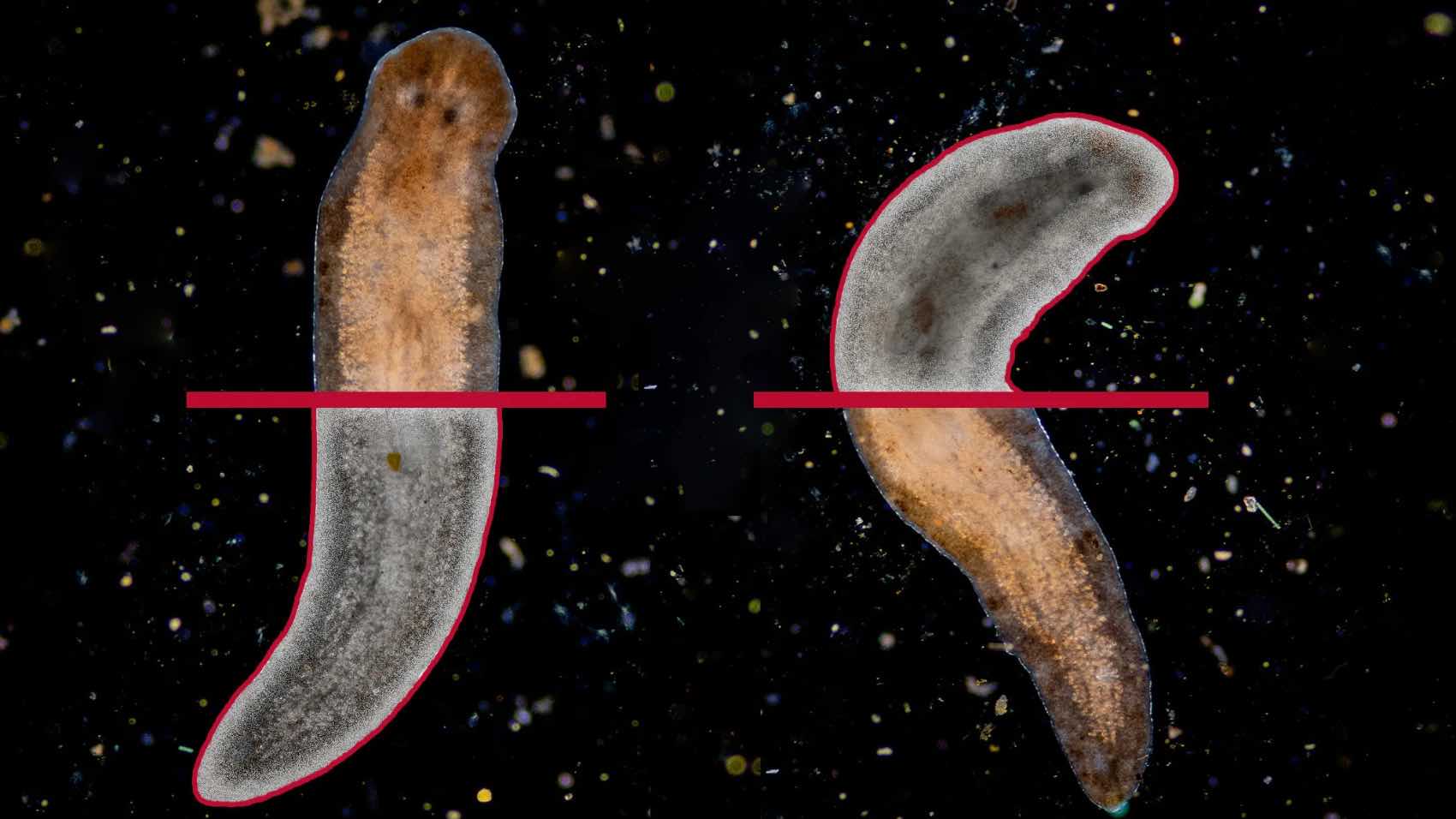
Your brain makes new neurons in only a few places, which leaves conditions such as Parkinson’s disease, where dopamine runs low and tremor and stiffness follow, with no natural repair crew. Planarians shrug off the same kind of loss, regrowing a brain from stem cells that can become whatever the body needs, and Rachel Roberts-Galbraith, an associate professor at the University of Georgia, led a search for the genes that tell those stem cells what to do.
Her team picked one cell type from the worm’s nervous system (the dopamine-making neurons), drew 74 candidate genes from a published atlas of the worm’s cell types, and in a screen turned each one down in turn by feeding animals double-stranded RNA, a trick called RNA interference, stirred into beef liver paste. After amputating heads, they counted the dopamine neurons that regrew, in groups of mostly 6 to 13 animals. Ten genes were needed to regenerate or maintain those neurons. Hardly ten copies of one job.

Two Genes Worked Everywhere, Eight Stayed Local
Silencing either fli1-2 or irx-4/6 thinned out dopamine neurons in the brain, the peripheral nerves and the pharynx, the worm’s feeding organ. The other eight kept to their own turf: foxA mattered in the pharynx, soxB1-2 in the peripheral nerves, and lmo1/3-1 and a relative of the amyloid precursor protein gene, whose fragments are tied to neurodegeneration, in the brain.
To tell whether a silenced gene stopped neurons being born or let them die, the team tracked newly made cells with a labeling tracer and, separately, blocked cell death by silencing two death-promoting genes, bax-1 and bax-2. In the brain, fli1-2 and irx-4/6 turned out to matter for both birth and survival; in the pharynx, for birth alone, clearly so only for irx-4/6; and in the peripheral nerves, the survival tests showed a role but birth could not be measured, because too few labeled cells appeared. The survival tests carried a complication, since silencing bax on its own also cut dopamine neuron numbers, which the authors suggest may reflect jobs for the gene beyond cell death.
“We figured out the genetic recipe for making these cell types in planarians,” Roberts-Galbraith says, and the ingredient list is real: ten genes, two of them body-wide. It is also a partial recipe, for one kind of neuron in a nervous system that holds at least 70 kinds.
The Genes Answered to Each Other
To see how the genes talk to one another, the team ran RNA sequencing on worms with soxB1-2 silenced, with both fli1 genes silenced together, and with both irx genes silenced together, using five replicates of 10 to 11 animals each. Silencing soxB1-2 alone shifted the activity of 1,682 transcripts (the RNA messages genes send) down and 820 up, a sweeping effect for a single gene, while the paired knockdowns changed far fewer. The results ran in loops rather than lines: soxB1-2 silencing lowered fli1-2 and irx-like transcripts, while silencing both fli1 genes lowered soxB1-2 in return.
A timing experiment added a wrinkle. Just after a 12-hour labeling pulse in regenerating heads, about 4 percent of newly made cells carried fli1-2 and about 1% irx-4/6, while almost none carried soxB1-2, and all three climbed later, which the authors read as identity genes arriving a little ahead of location genes inside one cooperative network.
A stranger result, this one about the worm’s back and belly. Silencing irx-4/6 hit dopamine neurons on the back harder than those on the belly and also slowed the animals’ gliding, a pairing the authors call counterintuitive but suggest means that dorsal dopamine neurons help set gliding speed.
Where the Recipe Runs Out
The university’s release frames the work as brain regeneration, counts almost a dozen genes and says they were knocked out, whereas the paper follows a single neuron type, reports 10 genes and describes turning each down with RNA interference rather than deleting it. And the authors are plain about what is missing: they do not know whether a separate program steers new neurons to particular parts of the brain, or whether neurons simply join the brain when nothing tells them to go elsewhere.
The hope is that a genetic recipe for one neuron type could make transplants of stem cell-derived neurons less hit and miss. Early clinical trials of such cells in people with Parkinson’s have begun, yet in the transplant studies the authors cite, fewer than 30 percent of engrafted cells showed signs of mature dopamine neurons after six to 12 weeks, and some cells wandered from where they were placed.
“We’re hoping this work helps others figure out how to create dopamine-producing neurons from stem cells that can be more effectively transplanted into patients,” Roberts-Galbraith says. Relatives of fli1 help specify dopamine neurons in roundworms, and a foxA relative influences their birth and upkeep in mice; mammalian versions of several other genes are active in dopamine neurons in human and mouse brain data, though what they do there has not been clearly established.
How does a stem cell that could become almost anything pick its first fate gene at all? The authors call it the most enduring mystery in how planarians make neurons, and chance is one proposal.
Reference
Clay, K. B., Medlock-Lanier, T., Grimes, R. N., Oke, O. O., Hudson, B. T., Wilson, M. M., Filipov, N. M., & Roberts-Galbraith, R. H. (2026). Combinatorial mechanisms specify cellular location and neurotransmitter identity during planarian neurogenesis. Nature Communications, 17(1). https://doi.org/10.1038/s41467-026-76397-4
- Study type: Experimental animal study in the planarian flatworm Schmidtea mediterranea: a reverse genetic screen using RNA interference, with follow-up cell-labeling, gene expression, sequencing and behavior experiments. Peer-reviewed; published open access in Nature Communications.
- Sample size: 74 candidate genes screened; most knockdown comparisons used about 6 to 13 animals per group, behavior tests 40 to 48 animals per condition, and RNA sequencing five replicates of 10 to 11 animals each.
- Intervention: Silencing single genes or gene pairs by feeding animals double-stranded RNA (RNA interference), then amputating heads or tails to trigger regeneration, or leaving animals uninjured to test maintenance.
- Comparator: Control animals fed double-stranded RNA matching a jellyfish fluorescent protein gene; silencing a dopamine-synthesis gene served as an additional positive control in some experiments.
- Duration: Regeneration was scored 7 to 9 days after amputation and behavior 6 days after; maintenance was tested in uninjured animals after repeated RNA feedings; cell-birth tracing followed labeled cells for up to seven days.
- Funding / conflicts of interest: US National Institutes of Health (neurological disorders and general medical sciences institutes), National Science Foundation, Alfred P. Sloan Foundation, McKnight Foundation and University of Georgia programs. The authors declare no competing interests.
- Data availability: RNA-sequencing reads are deposited at the NCBI Sequence Read Archive (BioProject PRJNA1249448); differential expression results, primer sequences and source data accompany the paper; behavior-video conversion code is on GitHub.
- Main limitation: Author-stated: it remains undetermined whether a separate program steers new neurons to particular brain regions. Not author-stated: the work covers one neuron type in one worm species, with no test in mammals.
FAQ
Could this flatworm research lead to treatments for Parkinson’s disease?
This research could eventually inform Parkinson’s treatments, but nothing in it has been tested beyond flatworms. The authors say that pairing genes that set a neuron’s type with genes that set its location could improve stem cell therapies that replace neurons, a field where fewer than 30 percent of engrafted cells in the studies they cite showed signs of mature dopamine neurons after six to 12 weeks. Whether flatworm genes do the same job in human cells is a question the study leaves open.
Do people carry the same genes as flatworms?
People have relatives of several of these genes, and some are active in dopamine neurons, but the flatworm work does not show what those relatives do in humans. Relatives of fli1 help specify dopamine neurons in roundworms, and a foxA relative influences their birth and upkeep in mice. For several other genes, mammalian versions are active in dopamine neurons in human and mouse brain data, though what they do there has not been clearly established.
How do researchers switch off a single gene in a flatworm?
Researchers switch off a single gene in a flatworm by feeding the animal double-stranded RNA that matches the gene, mixed into beef liver paste, a method called RNA interference. It turns the gene’s activity down rather than deleting it, which is why this article says silenced or turned down instead of knocked out. The team then counted the dopamine neurons that regrew and compared groups.
Why would losing dopamine neurons slow a flatworm down?
Losing dopamine neurons can slow a flatworm because reflexes such as flipping over lean on those neurons. In the study, worms with fli1-2 silenced were slow to flip themselves over, and silencing irx-4/6 slowed their gliding as well. The authors suggest that dopamine neurons on the worm’s back help set gliding speed, though they call that result counterintuitive.


Cite This Page