
What the Study Found
- Among 771 people hospitalized with Covid-19, those with the most severe long Covid had a distinct mouth and airway bacterial profile.
- Reduced lung function and brain fog went with a distinct mouth profile; gut symptoms went with a distinct sputum profile.
- Lactic acid bacteria became more prevalent in people with worse outcomes, and their abundance went with higher blood inflammation markers.
- Samples came six months after discharge, so the study cannot say whether the microbial changes came before or after Covid-19.
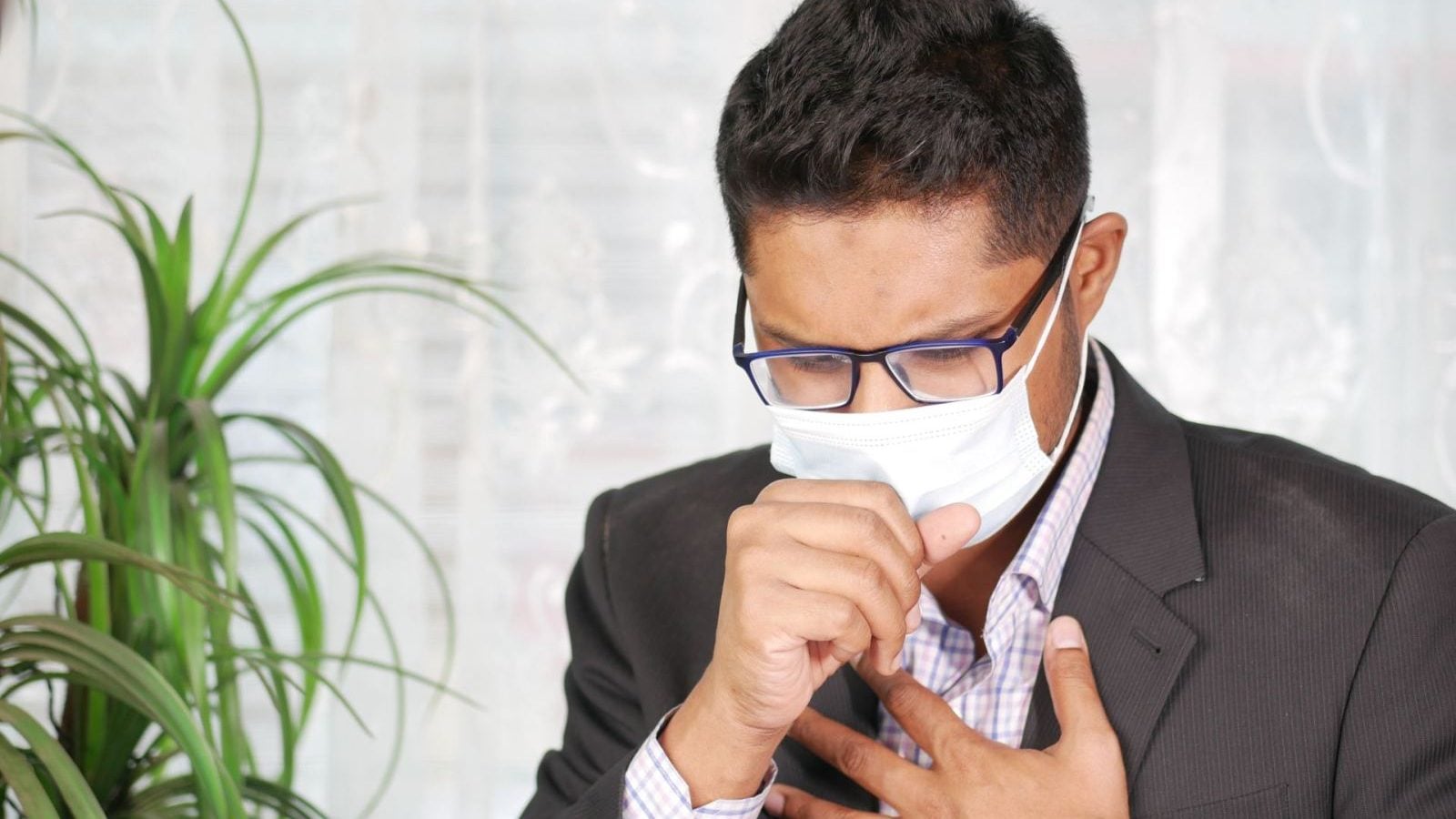
A MOUTH rinse and a cough of sputum, the thick mucus from deep in the airway, sound like humble raw material, yet each is a census of the bacteria living there. In a study of 771 people who had been hospitalized with Covid-19, those with the most severe long Covid carried a distinct mix of bacteria in their mouths and airways six months after leaving the hospital. The mix went along with specific symptoms too, from reduced lung function to brain fog to gut trouble. Whether those microbes have anything to do with causing the symptoms is another question entirely.
Nobody has pinned down what causes long Covid. A review of the immunology of long Covid, published in 2023, judged the mechanisms still unsettled, with an immune-driven picture emerging but too little data for a full account. The microbiome, the community of microbes living in and on the body, makes a tempting suspect, and earlier work had looked mostly at the gut: a prospective cohort of 106 Covid-19 patients, followed for six months, found that gut bacteria at admission were associated with lingering symptoms.
Daniela Alferes de Lima Headley at the University of Dundee in Scotland and her colleagues went looking in the lungs instead. “Covid is a lung disease and so it makes sense to look to see if the lung microbiome is changed in long Covid,” she said. Her team drew on a prospective cohort, part of a national follow-up study funded jointly by Britain’s National Institute for Health and Care Research and UK Research and Innovation, that enrolled people treated for Covid-19 between February 2020 and March 2021 at one of 38 hospitals. Six months after discharge the researchers collected mouth samples and sputum, then read a bacterial marker gene (a stretch of genetic code that differs from one species to the next) to see who was present and in what quantities.

Mouths and Lungs That Looked Different
Then came the sorting. Using symptoms recorded five months after discharge, the team had already split participants into four groups, ranked from very severe to mild, and the microbes were matched against those labels. People in the very severe group stood out. James Chalmers, who led the study and also works at Dundee, said those with the worst symptoms “had big changes in the microbiome in their mouth and lungs.”
Individual symptoms mattered too. Reduced lung function (lungs holding less air than normal, or air moving through them less easily), memory and attention trouble, and gut symptoms such as pain, nausea and diarrhea each lined up with their own microbial signature.
Brain Fog Showed Up in the Mouth
Here the release and the paper part ways, slightly. A press release describes the lung microbiome tracking brain fog and gut symptoms. The paper’s abstract is narrower: reduced lung function and persistent neurocognitive symptoms (brain fog, in plain English) went with a distinct mouth profile, and only the gut symptoms went with a distinct sputum profile. Lungs, in other words, may be getting credit for work the mouth did.
The clearest shift involved lactic acid bacteria, the microbes that make lactic acid. A network analysis picked out keystone taxa (the microbes sitting at the hubs of each community), and in people with worse outcomes those hubs moved toward lactic acid producers. Their abundance was also associated with higher levels of inflammatory proteins in the blood. That fits an immune angle, though the authors only suggest these bacteria may be associated with the host immune response, which stops well short of showing they do anything.
Before or After Covid?
What the study cannot say is which came first. “What we don’t know is whether these changes came before a Covid infection, or whether the changes happened following a Covid infection,” Chalmers said. Everyone enrolled had been in the hospital with Covid-19, so people whose long Covid followed a milder infection are not represented, and the snapshots date from six months after discharge, with nobody yet knowing how they change in later years.
Counting microbes by sequencing is touchier than it sounds, too. When researchers at the National Institute of Standards and Technology sent one stool sample to seven consumer testing companies, the reports varied widely. Those were consumer kits rather than research sequencing, so it is a caution about the method, not a verdict on this study.
Raquel Duarte at the University of Porto in Portugal, who was not involved in the work, called the findings “an important basis for further longitudinal and mechanistic research.” If the associations hold up, she added, they may eventually help predict, prevent or treat the most disabling forms of long Covid. Chalmers sees the same door. The microbiome, he noted, can be changed with antibiotics, probiotics or other measures, and microbes do rewrite local chemistry: a recent ScholarPeer story described bacteria from urine converting a steroid precursor into testosterone in a lab dish. This study tested no treatment, though. It counted microbes.
For now the basic questions stay open, and Chalmers says so plainly: “We would love to know whether these changes get better with time.”
Reference
Alferes de Lima Headley, D., Richardson, H., Hennayake, C., Eke, Z., Stobo, J., Long, M. B., Leavy, O. C., Richardson, M., Elneima, O., McAuley, H. J. C., Shikotra, A., Singapuri, A., Sereno, M., Saunders, R. M., Harris, V. C., Houchen-Wolloff, L., Greening, N. J., Ntotsis, K., Lozano-Rojas, D., … Chalmers, J. D. (2026). Sputum and oral microbiota profiles are associated with long COVID severity and phenotype post-hospitalisation: a UK multicentre, prospective cohort study. European Respiratory Journal, 2601162. https://doi.org/10.1183/13993003.01162-2026
- Study type: Prospective cohort study (observational), nested in a British national follow-up study of people hospitalized with Covid-19. Peer-reviewed: European Respiratory Journal, accepted manuscript published Early View.
- Sample size: 771 participants had oral and sputum microbiota assessed; 722 had oral rinses and a severity-group assignment (38.5% women, mean age 57.5 years).
- Exposure: Long Covid severity group (four groups, very severe to mild) and symptom subgroups: reduced lung function, neurocognitive symptoms, gastrointestinal symptoms.
- Comparison group: Participants without severe long Covid, and those without the symptom of interest.
- Follow-up: Mouth and sputum samples taken 6 months after hospital discharge; severity groups assigned from symptoms at 5 months.
- Funding / conflicts of interest: Jointly funded by the National Institute for Health and Care Research and UK Research and Innovation. Many authors declare industry grants or consulting fees; study lead James Chalmers is the journal’s chief editor.
- Data availability: Not reported in the abstract.
- Preregistration: Not reported in the abstract.
- Main limitation: Not author-stated in the abstract: an observational design with samples from one time point cannot show whether the microbial differences preceded or followed Covid-19; hospitalized patients only.
FAQ
Could changing the microbiome treat long Covid?
Changing the microbiome could in principle become a long Covid treatment, but this study has not shown that. The lead researchers note that the microbiome can be changed with antibiotics, probiotics or other measures, and they hope to see treatment trials. This study only counted microbes in people who already had symptoms, so it cannot say whether altering them would help anyone.
Do mouth bacteria really have anything to do with brain fog?
Mouth bacteria and brain fog went together in this study, but that is an association, not a demonstrated cause. The paper’s abstract ties persistent neurocognitive symptoms, which include brain fog, to a distinct mouth profile. Nothing in the study shows whether those bacteria played any role in the symptoms or simply followed from them.
Why can’t the study say whether the bacterial changes came before long Covid?
The study cannot say whether the bacterial changes came before long Covid because samples were taken only six months after hospital discharge. The lead researcher said plainly that nobody knows whether the changes came before or after the infection. Untangling that would take follow-up over a longer period, or samples from before infection.
Do these findings apply to people who had a milder Covid infection?
The findings may not apply to people who were never hospitalized, because everyone in the study had been in the hospital with Covid-19. People whose long Covid followed a milder infection are not represented. Whether their mouth and airway bacteria look similar is not something this study can answer.


Cite This Page