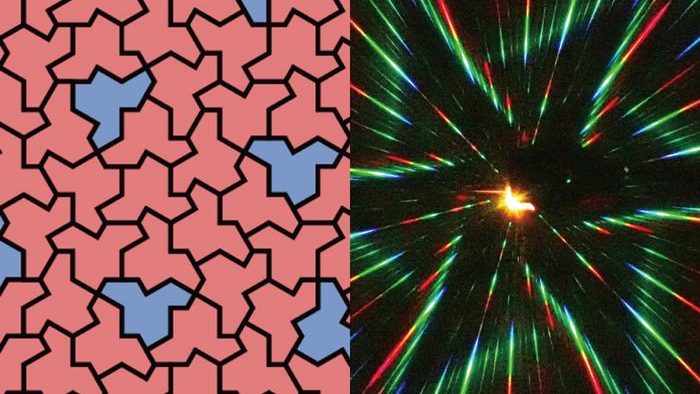
A long-sought aperiodic pattern composed of Smith hat shapes

What Is the Smith Hat?

A 13-sided shape that a retired print technician cut out of card in 2022 settled a question mathematicians had been chewing on for 60 years.

A long-sought aperiodic pattern composed of Smith hat shapes

One Tile Shape Makes a Chip Care Which Way Light Spins

Physicists in Japan etched 372,100 holes into a silicon chip following the Smith hat tiling, then found that left-handed and right-handed circularly polarized light scatter off it differently, an asymmetry conventional quasicrystals cannot produce.

Bronze sculptures depicting Ireland's Great Famine along Dublin's city streets.

Why Your Brain Reacts Less As the Death Toll Rises

Brain scans of people reading real disaster headlines revealed a stark split: response to money climbed with the stakes, while response to human lives sagged as the toll rose and flattened almost entirely for deaths in other countries.

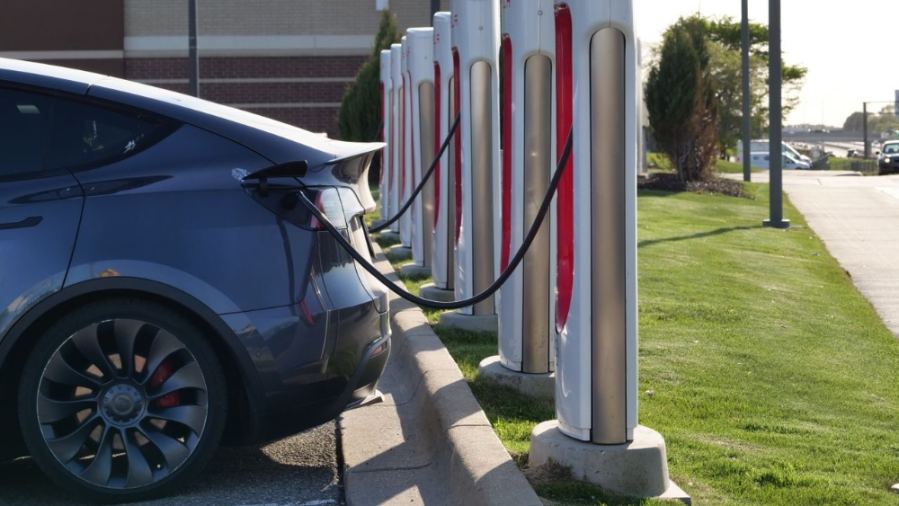
Electric car plugged into a row of charging stations, showcasing modern EV infrastructure.

Air in the Warehouse Can Wreck a Car Battery Cathode

Manganese is added to nickel-rich battery cathodes to protect them. A South Korean team found that if the raw powder meets air before baking, the shield turns corrosive and can double how fast the cell fades. Extra lithium reverses it.

Two protestors at a rally, one speaking passionately into a megaphone, conveying strong messages.

Why Political Moderates Look Like the Enemy to Both Sides

Five preregistered experiments with 3,272 US participants found that people with a stake in an issue read genuinely middle-ground positions as belonging to their opponents. The pattern held only where the issue was moralized and the other side felt threatening, and it did not appear when the moderate was described as rejecting both sides rather than accepting both.

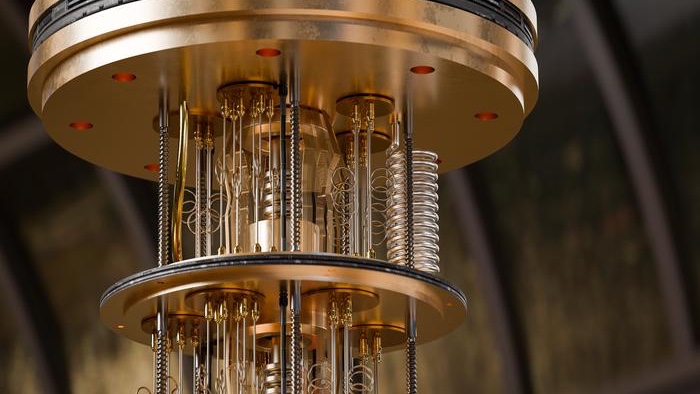
A quantum computer's cooling system keeps its quantum chips at temperatures close to absolute zero. Only under these conditions can the chips exhibit the quantum properties that make quantum computing possible (artistic impression). CREDIT B. Schröder/HZDR

Bigger Quantum Computers Could Freeze Up Instead of Speeding Up

A quirk of quantum measurement could stop one whole class of quantum computer in its tracks. The more qubits you add, the smaller the energy gap the machine relies on becomes, while noise from the surroundings goes on checking up on it just as often as before. All that checking holds the calculation still.