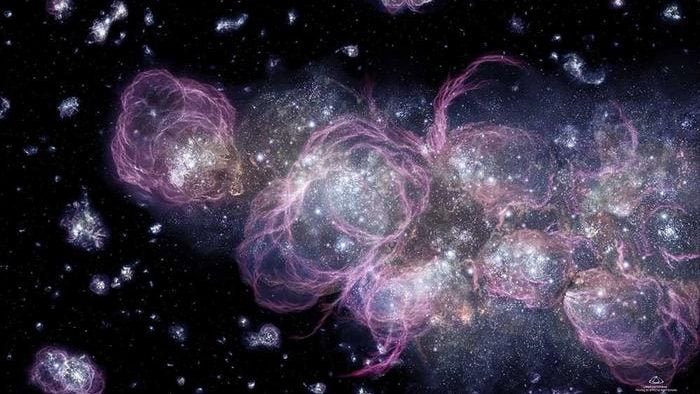

Artist’s conception of early star formation. The first stars may have formed as early as 100 million years after the big bang, when dense clouds of hydrogen and helium collapsed under their own gravitational pull. Once the pressure and temperature were high enough, hydrogen atoms began to fuse together, releasing energy in the form of light. CREDIT NASA, STScI/A. Schaller

Giant Stars Starved of Metals Seem to Run Out of Puff

Ultraviolet spectra of 29 massive O-type stars in six nearby dwarf galaxies show winds weakening as metals thin out, and hint at a sharper drop in the most metal-poor, with consequences for how astronomers read Webb’s earliest galaxies.

Creative surreal art featuring two women with large spherical white headwear touching foreheads.

Scientists Say the Brain Is Two Organs, Not One

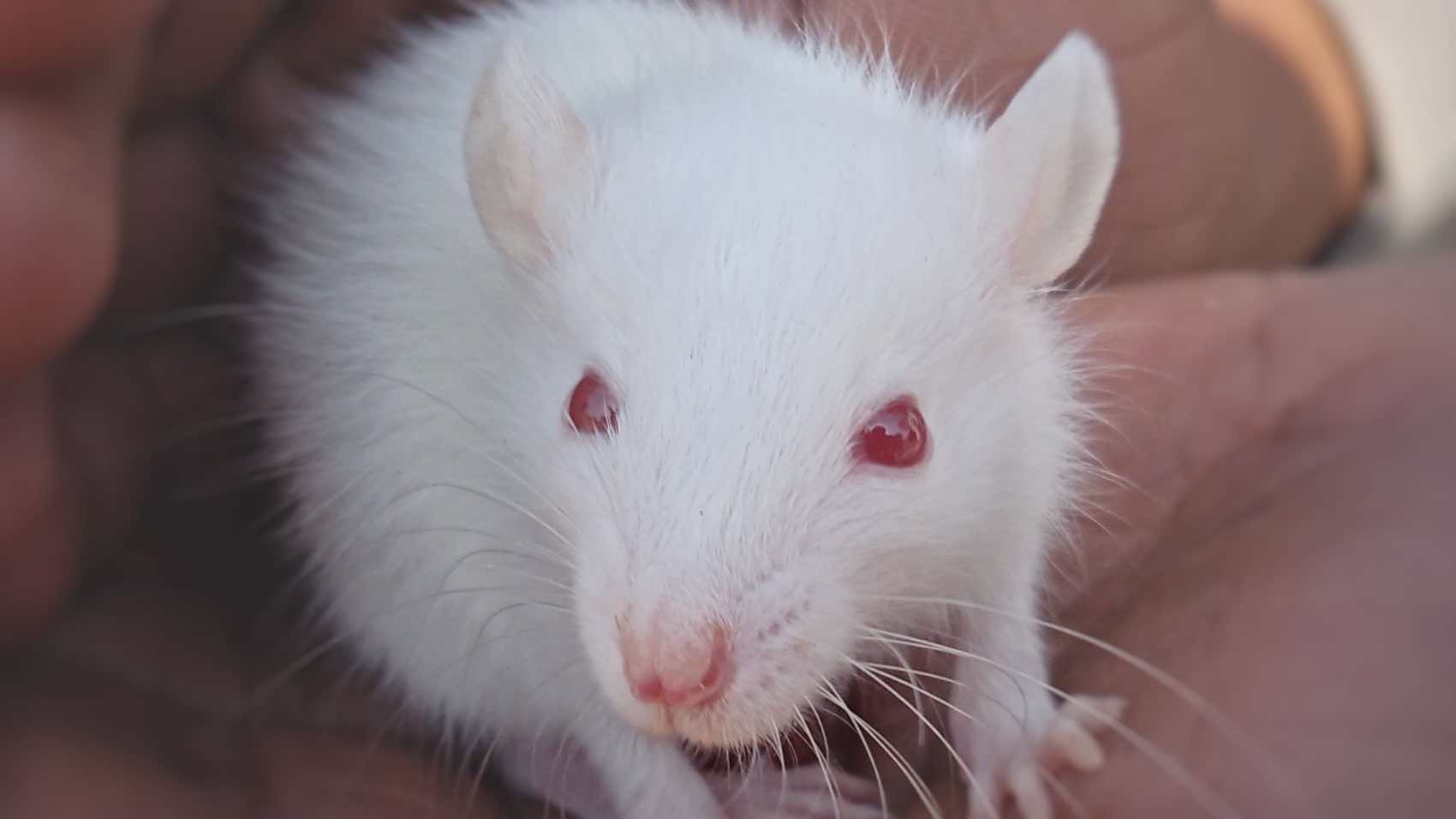
Stanford researchers traced two separate progenitor cells in mouse embryos, one wiring up the thinking brain and the other the life support system of breathing and heartbeat, explaining why hindbrain neurons have been nearly impossible to grow in a lab.